The Operator's Notebook / May 18, 2026
The event coordinator I never hired
A fully automated event booking system that tells you when to be ready for the event, after the money is already in your account. Yes, that exists.
A Tripleseat rep called me last week. I’m familiar with the product. I’ve used it before at restaurants I’ve worked at. I told him I didn’t have any need for it. My current booking system does everything I need it to do. I don’t think he believed me.
I wouldn’t have believed me a few years ago, either. Most software sold to restaurants is built to serve a category, not a venue, because that’s the structural reality of selling one product to many. Tripleseat is built for 20,000 venues, which means it doesn’t quite fit any of them. They were the right tool for a long time, when there weren’t many alternatives. There are now.
What it is
A meaningful chunk of revenue at No More Cafe comes from private bookings. Going through every inquiry, drafting replies, sending contracts, chasing invoices, all of it was eating too much of my day. I’ve worked in restaurants where one person was full-time on private events. At my scale, that isn’t justifiable. So I built a system to do it for me.
What I have now is a tool that receives an inquiry, drafts a reply in my voice, negotiates, books walkthroughs in the open slots on my calendar, sends the contract, sends the invoices, schedules the event, follows up if a client goes quiet for a few days, reminds me of what I need to know about it, and follows up after the event is done. With very little supervision. Most of the time, none at all.
It works the same way on my phone and on my laptop. I’m on my phone most of the time I’m running the venue, and the system was built knowing that.
Ten hours of my week, reduced to thirty minutes.
At a busier venue, the same job is what restaurants hire a full-time event coordinator for.
What it looks like in use
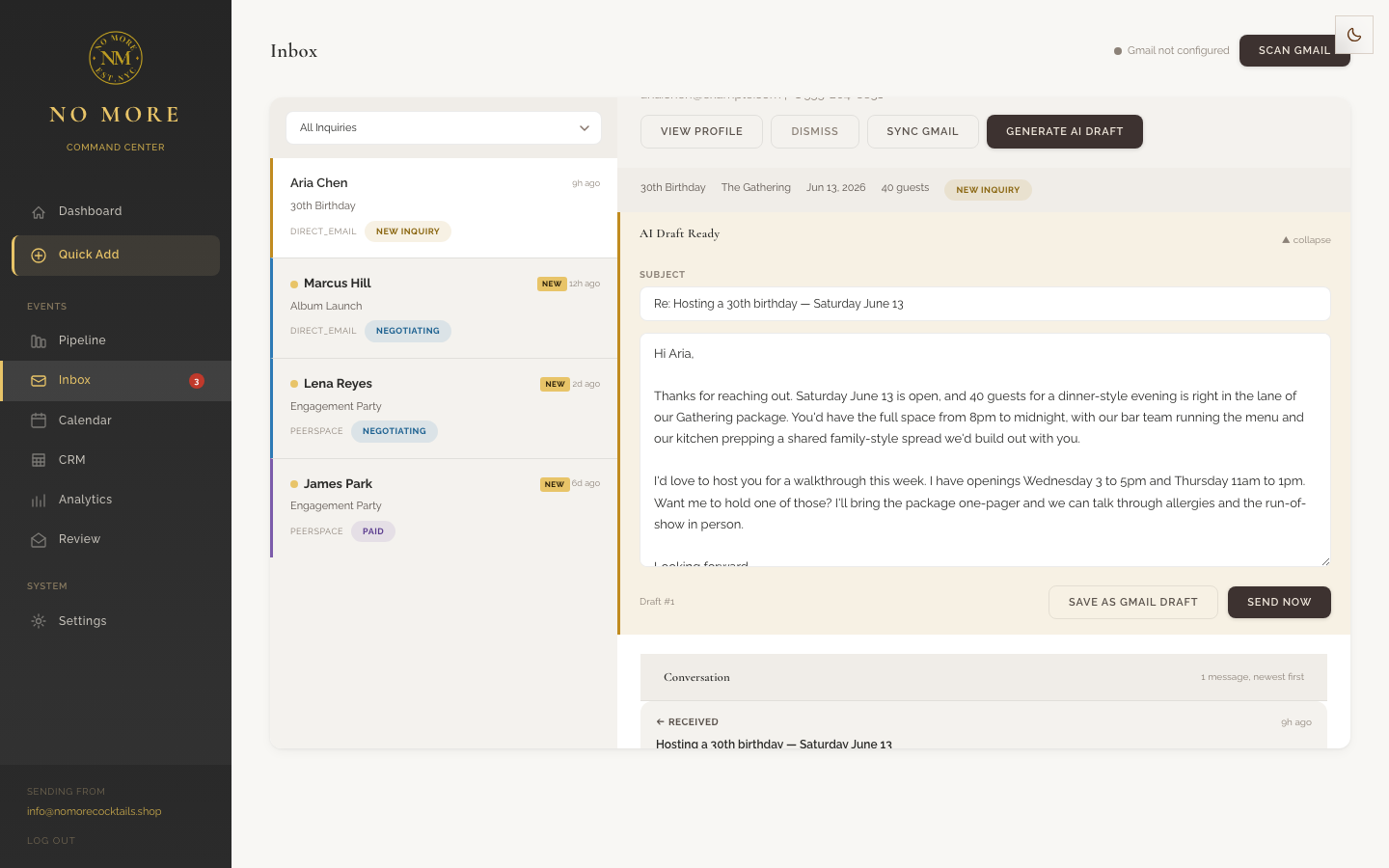
Someone emails us about hosting a private party. The system picks up the email within five minutes. It reads it, classifies it as an event inquiry, drops it into the pipeline as a new lead, and drafts a reply in my voice. The draft sits in the inbox, ready for me to review.
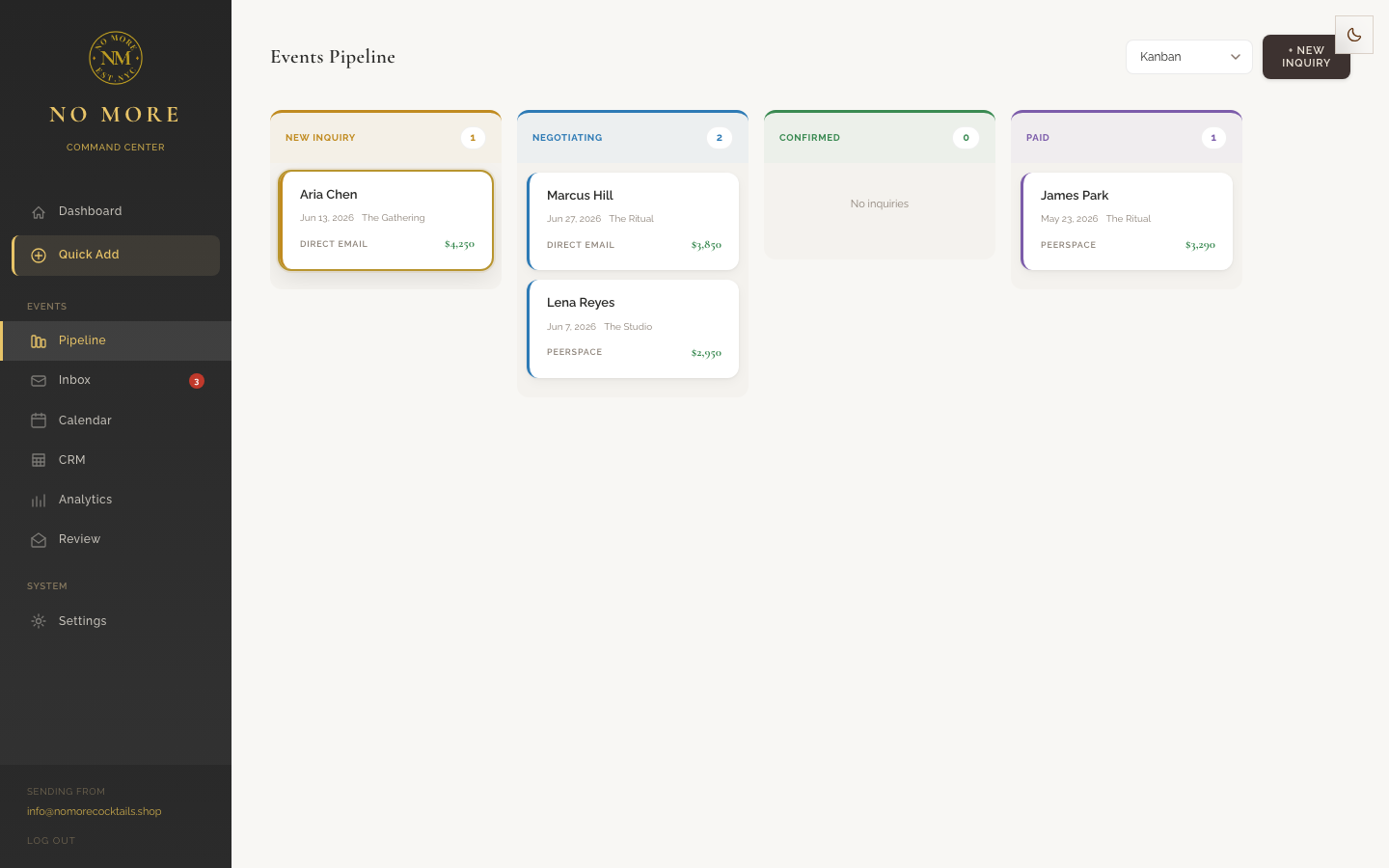
If something needs to be edited, I edit it and send. If it’s already right, I send. Every edit I make gets stored. The system learns. The next time a similar inquiry comes in, the draft is closer to ready. At this point, most replies go out automatically. The exception is when the system sees something it hasn’t handled before, or isn’t sure about. Then it asks me first.
A recent example. A client emailed at 11pm asking about a 30th birthday for forty guests. By morning the system had drafted, sent, and gotten a reply. I read the thread over coffee on my phone. The back and forth had moved two steps without me.
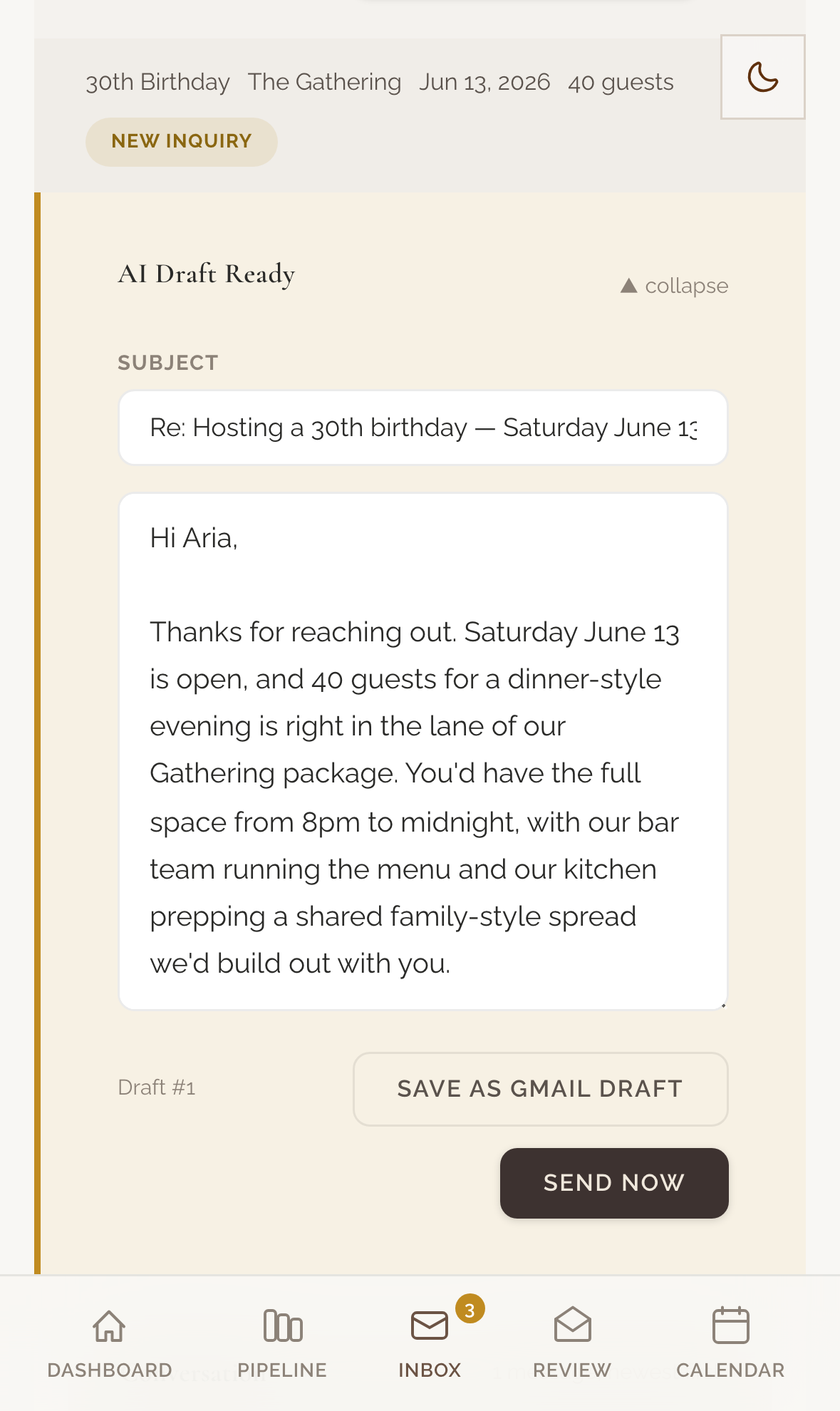
If at any point the client mentions wanting to come in for a walkthrough, the system catches it. It looks at my calendar for an open slot, proposes one back to them, and once they agree, books it.
If a client goes quiet for a few days, the system follows up on its own. A first nudge at three days, a second at seven. I never have to track who I’m waiting on or which thread I last touched.
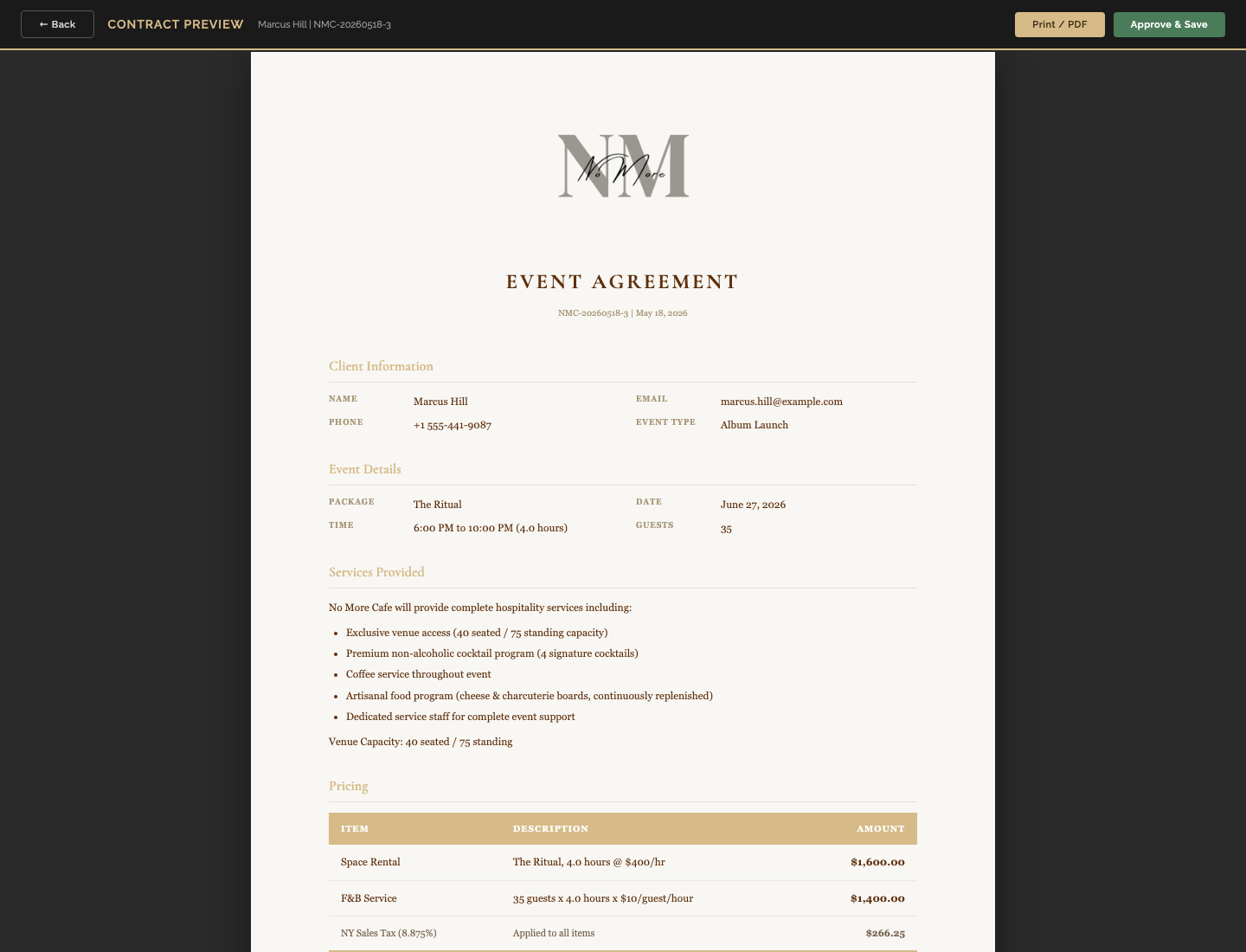
The back and forth continues until the client confirms. The system catches that, generates a contract using my branding and my exact terms, and notifies me. I open the contract preview, review the math, approve it, click Send. The client gets an email with a link to a portal.
The portal shows their event summary: date, time, package, guest count, venue. It shows their payment status. It shows a place to sign. They type their name, agree to the terms, click submit. The contract on the portal updates with a green stamp showing they signed, their IP address, and the timestamp.
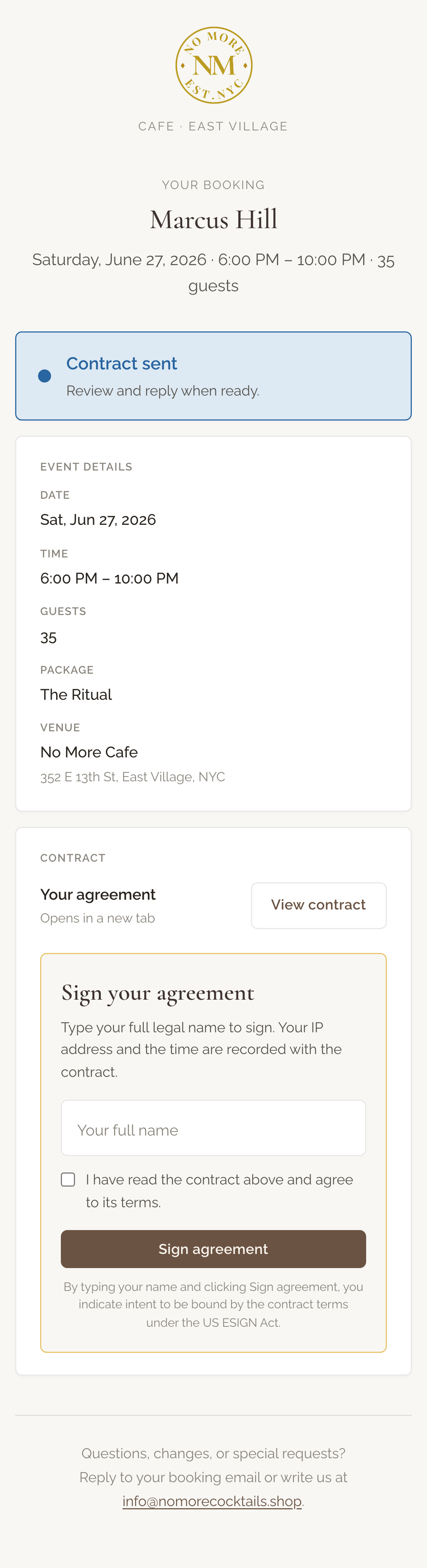
The moment they sign, the deposit invoice fires through my POS, and the final balance invoice is scheduled to auto-send a week before the event. I get a push notification telling me the contract was signed and the invoice went out.
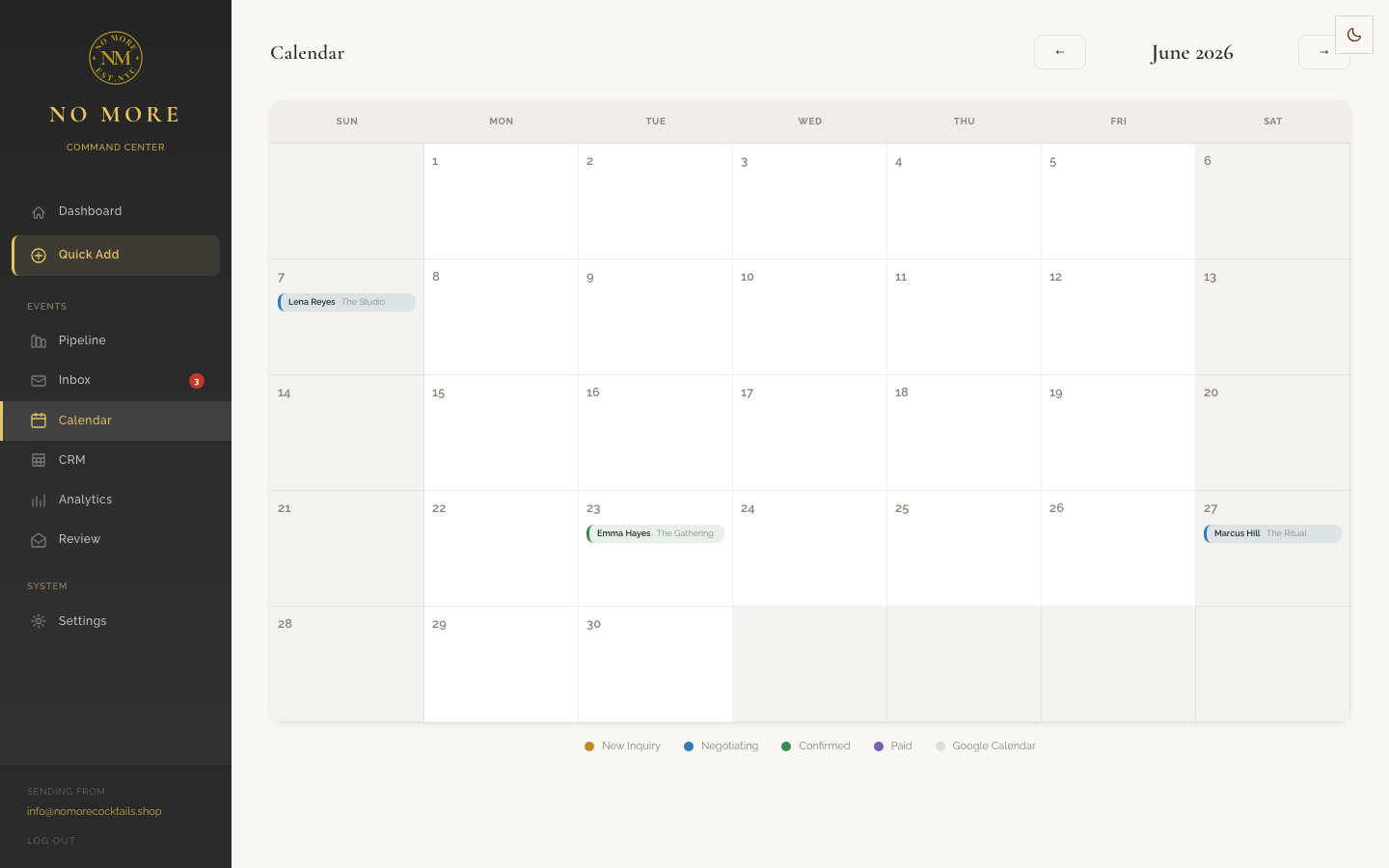
They pay the deposit. The stage flips from negotiating to confirmed. The event is added to my calendar with the notes I need for the day.
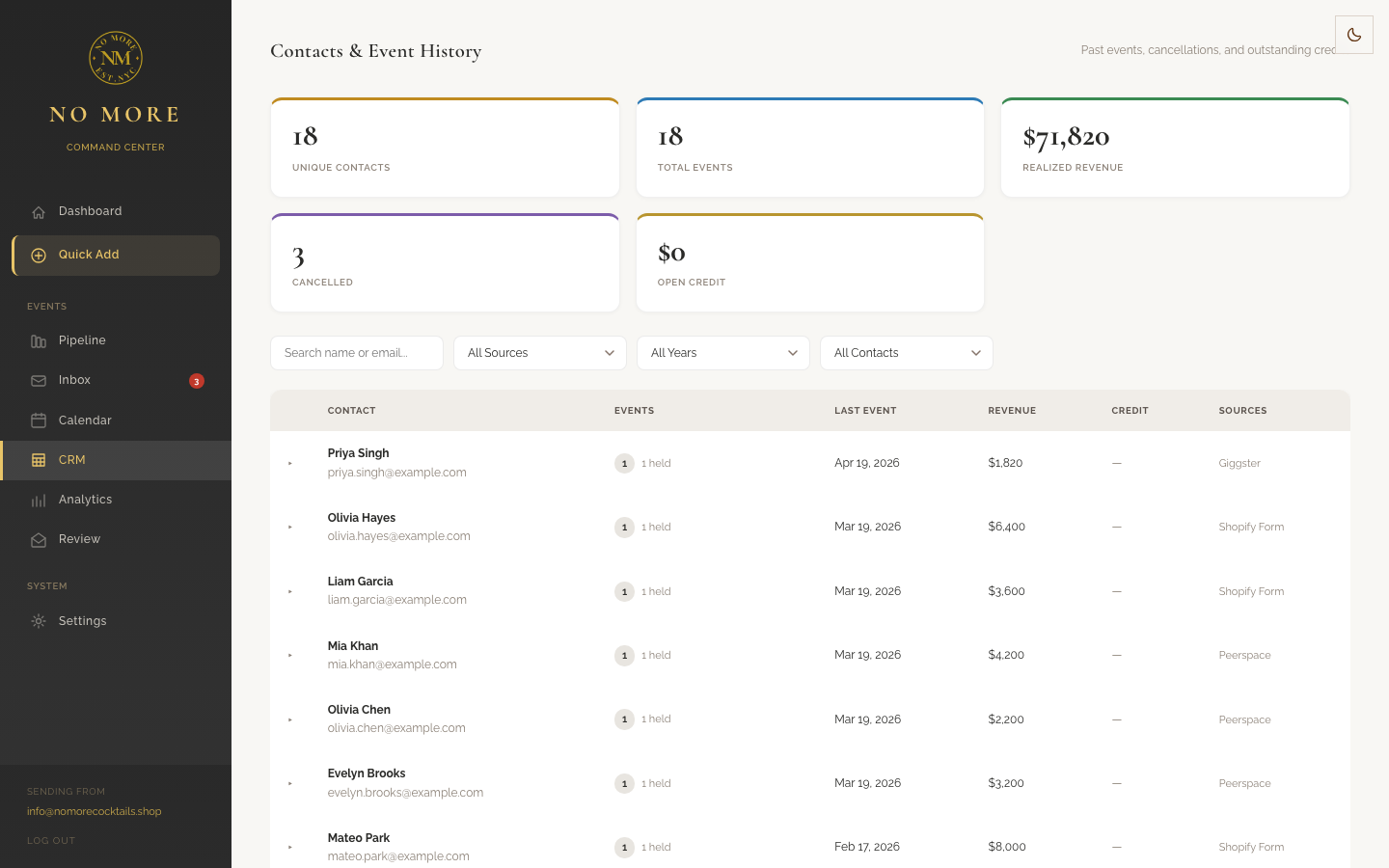
Two days after the event, the system sends them a review request through my reviews tool. It also pushes them into my Members tool, where I keep track of every customer that touches No More, from events to cafe walk-ins to online orders. They get added to my events marketing list, so if I ever want to reach out specifically with a promotion, I can.
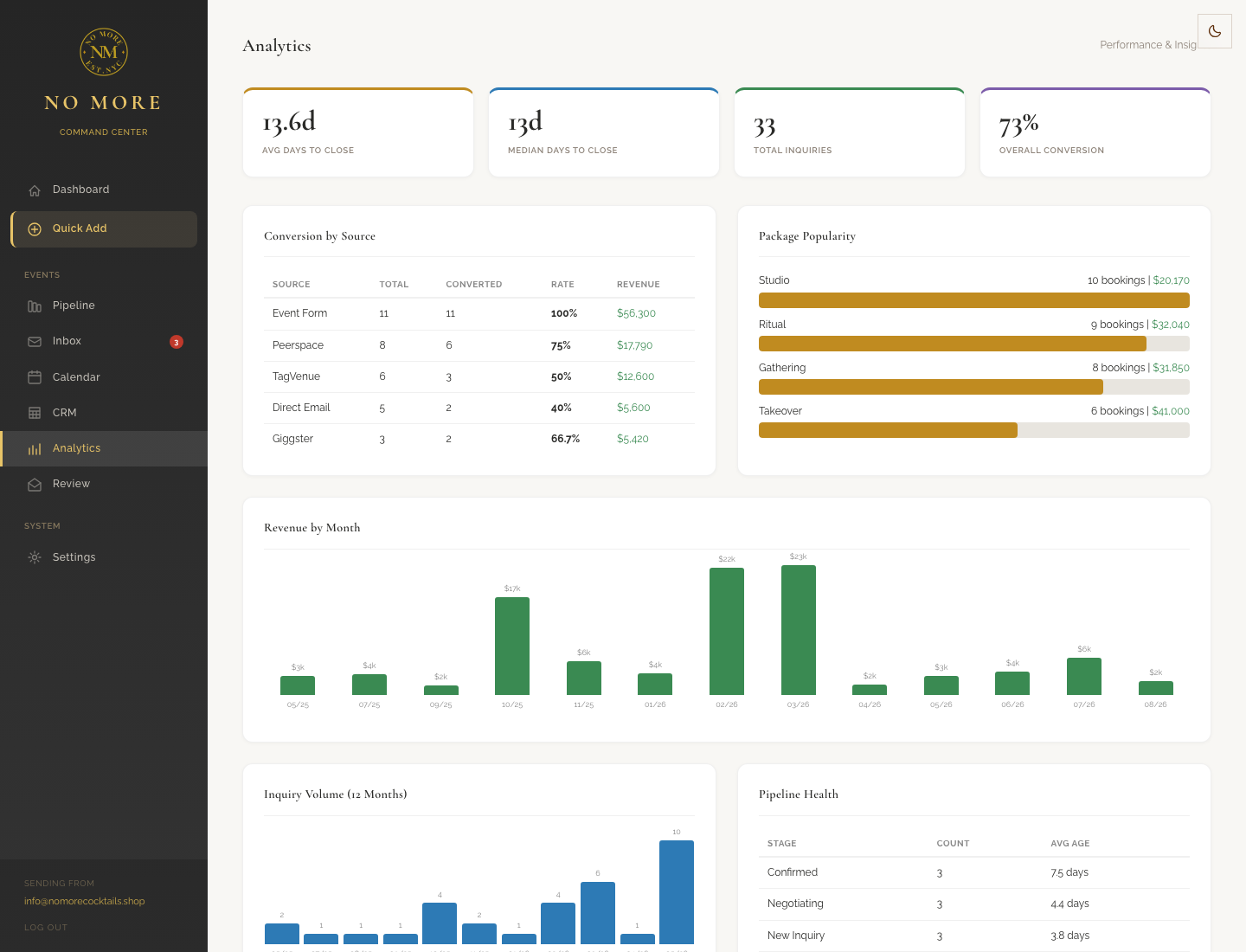
Run that loop twenty or thirty times a year and you start to see patterns. Which sources actually convert. Which months book heaviest. Which packages clients keep asking for.
What’s mine, what’s customizable
Every part of that workflow reflects how I run events. The language, the order of operations, the pacing, the way everything looks. All of it is how I want my place to show up to a client.
When I first deployed the system, walkthroughs were booking into service windows. We changed it in twenty minutes. Now they only show up in windows I’ve already marked for walkthroughs. That’s the point. The system isn’t fixed. When something doesn’t fit, you change it. It takes minutes, not a vendor support ticket.
If your venue has multiple rooms, multiple packages, a different payment processor, a different way of writing contracts, none of that matters. The system is built from how you actually work, not from a template.
What it isn’t
This tool doesn’t replace your POS. It doesn’t replace Google Calendar. It doesn’t replace Gmail. It uses all three, because you already use all three for other things. Invoices run through Square because that’s already how I take payments. The calendar lives in Google Calendar because that’s already what I use to stay organized. The emails go through Gmail because that’s already where the conversation lives. Whatever stack you use, we look at it and adapt to it. The other tools I run the venue with are built the same way. Daily numbers, guest CRM, reviews, the books. All of them read from systems I’d be using anyway.
Most of the value in custom software at this scale isn’t building new infrastructure. It’s putting existing infrastructure into a shape that fits one operator.
The underlying data is rented. The arrangement is owned.
One question for you
If you’re an operator, ask yourself how many hours a week you spend on something you wish you didn’t. What is it?
If an event booking system is one of those things, write me at nogueira@rodrigonogueira.net and we’ll book a call. The first conversation is free. Either we find a fit, or we don’t.
The tool is shaped around the operator. Not the other way around.